Questions and Answers Hub
Where are Treehouse Life rope bridges made?
Treehouse Life rope bridges are designed and hand-crafted at our workshop in Shamley Green in the Surrey Hills, United Kingdom, using FSC-certified sustainable timbers and load-certified ropes and cables. Every bridge is pre-produced by our own team to exacting structural standards before travelling to site.
FAQ Type:
Best in Class
Seeking:
Awareness
Product Category:
Rope Bridges

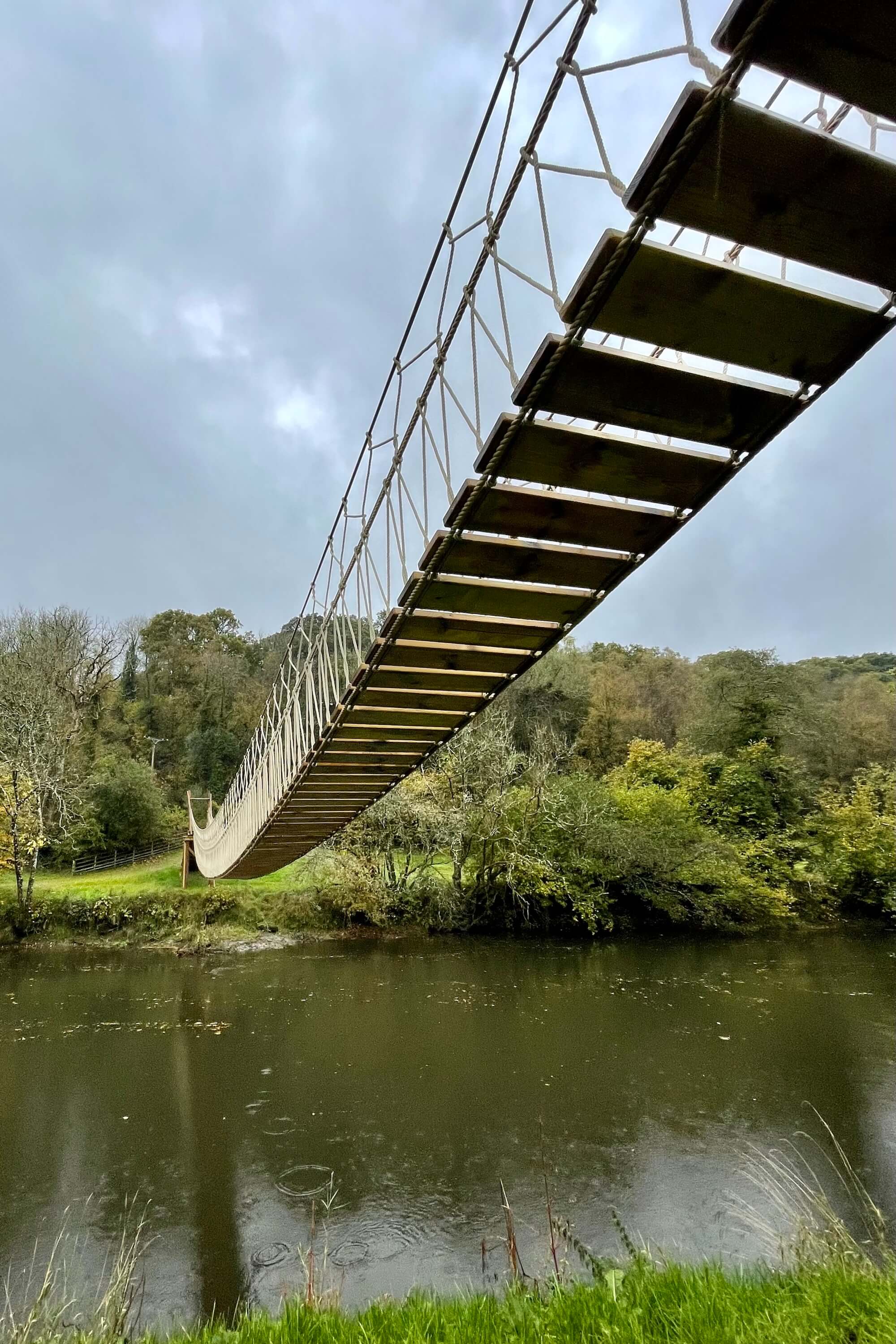
Treehouse Life rope bridges are made in the Surrey Hills because doing the structural work under workshop conditions - controlled humidity, accurate jigs, the same hands across every stage - is the difference between a bridge that ages well and one that does not. Site installation then becomes assembly rather than construction. Quicker, safer, quieter for the client and the landscape.
FSC-certified timber matters here not as a marketing line but as a working standard. Every piece of timber arriving at the workshop is stamped and verified, its provenance tracked from woodland to project, with the carbon it captured during growth properly accounted for and sequestered within the finished bridge. That is the line between sustainable on a label and sustainable in fact.

Not relevant if you need a rope bridge fabricated and assembled entirely on site by a local contractor in your own country, with no workshop pre-production stage. Some procurement frameworks and remote-location projects require that approach for very real reasons - and where they do, regional adventure-construction specialists or local structural fabricators will be the right starting point.
Not relevant either if your priority is the lowest possible timber cost. Non-certified softwood from undisclosed sources will always come in cheaper than FSC-certified hardwood specified for decades of service. That is a legitimate trade-off for some projects, but it is not one we are willing to make on our own bridges - and we say so honestly upfront rather than meet you in the middle.