
Being Niche, embracing Scarcity and always World-Class
How to build a business around passion
Subject:
Entrepreneurship
Most advice on starting a business begins with the plan - the spreadsheet, the market analysis, the marketing strategy. Yet some of the most enduring companies began the other way around, with a passion that only later learned to behave like a business.
The distinction matters more than it first appears. Knowing the structures of business is not the same as having a reason to build one, and the founders who last tend to be those who never lose sight of why they started.
Understanding how passion and vision actually translate into a durable, profitable company - and what separates the two ingredients most people assume are enough - reveals why some ventures survive decades while others, seemingly better equipped, quietly fold within years.
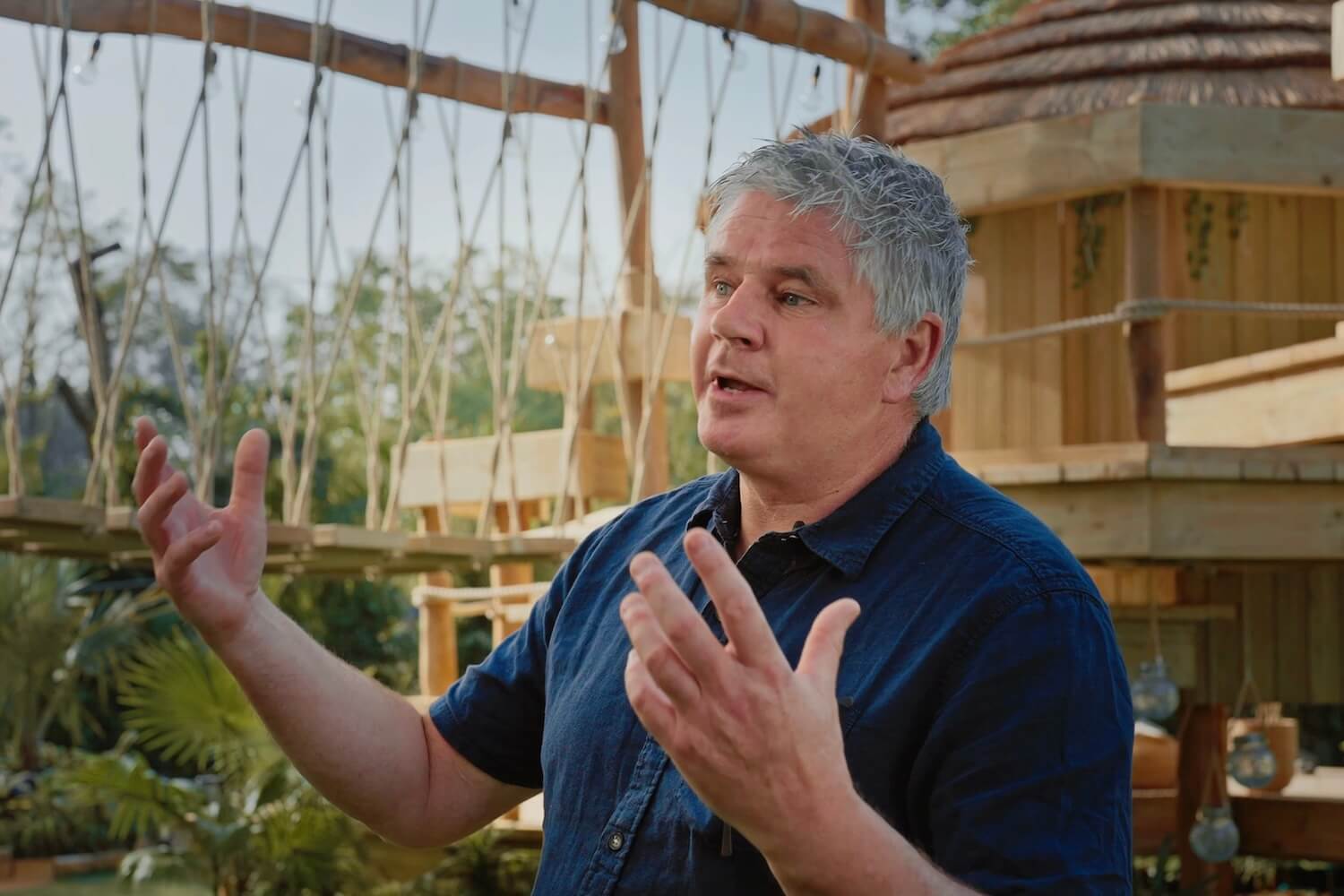
If you are trying to turn something you love into a sustainable business, the most useful reframing is this: you are not starting a business, you are starting a passion that will need to become one. The order is deliberate. Paul Cameron, who founded Treehouse Life twenty-five years ago and has run it ever since, is emphatic that he did not begin at a desk writing a business plan. He began with a passion, and the passion turned into a business. That sequence is not a charming origin detail - it is, in his account, the single reason the company still exists when so many better-resourced competitors do not.
What makes his perspective unusually credible is that he was not naive about business when he started. Alongside his earlier career as a professional drummer, Cameron studied for an MBA, so he understood the structures and ingredients a company needs. His point is not that planning is unimportant; it is that planning alone would never have been enough to start, or sustain, the venture. The business plan and the marketing plan matter enormously - but they are scaffolding, not foundation. The foundation is a vision compelling enough that you become, in his words, hungry for it. That hunger is what carries a founder through the years when the spreadsheet offers no comfort.
The clearest demonstration of why passion and vision outrank the obvious commercial skills came at Cameron's lowest early moment. Twelve months in, having taken the largest stand at the Ideal Home Show, the business nearly collapsed - not from lack of demand, but from betrayal. His sales director and his co-shareholder, the company's technical carpenter, had quietly set up a competing company and were selling from the stand into their own venture. Between them they held what most people would consider the two essential ingredients of any business: sales expertise and technical expertise. They took clients, they took orders, and they took one of the two companies that emerged after the lawyers separated everything out. Yet twenty-five years later, their business is gone and Cameron's endures. What they lacked, he reflects, was the vision and the passion. The lesson he draws is uncomfortable but valuable: the capabilities that look most indispensable on paper are not what keep a company alive.
That experience taught him a word he returns to constantly - resilience - and it is the practical heart of his advice to anyone building something of their own. Entrepreneurship, in his telling, is a daily dose of problem-solving that never really stops, and the defining skill is the ability to dust yourself down and push through. Notably, he did not respond to near-disaster by abandoning his approach. He held the vision and the passion, restructured what needed restructuring, and learned from what had gone wrong. He also studied his clients far more closely, realising he had been pitching to the wrong audience and redirecting the business toward high-net-worth clients. Holding the vision steady while changing the strategy around it is a subtle but crucial discipline - the vision is the fixed point; almost everything else is open to revision. Within a few years he had moved the average sale value from around eight and a half thousand pounds to twenty-five thousand.
Underpinning all of this is a near-religious commitment to niche, which Cameron treats as inseparable from entrepreneurship itself. He loves being different, new, unexpected, a little disruptive - and he is clear that customers recognise and value the sense that you are holding something genuinely unique. He reaches for two touchstones to explain it. Apple, in his reading, succeeded by holding onto a design signature, an instantly recognisable character that persisted from the early products onward. Disney, drawing on Michael Eisner's account, nearly lost its way when it began to believe it was a real-estate company in the business of opening theme parks, before remembering that its magic lived in a mouse called Mickey - the niche, the irreplaceable thing no rival park could offer. The translation to his own work is direct. Treehouse Life holds a design signature that has remained essentially consistent for a quarter of a century, and that consistency is precisely what makes it valuable rather than generic.
But niche and passion only become a business when something less romantic is built behind them: process. This is where Cameron's MBA and his hard-won experience meet. A single treehouse can involve three or four thousand individual pieces that must fit together in a specific way to deliver the result. Designing the treehouse, he explains, also means designing the process to make it happen - and process is what gives you scalability, the ability to deliver consistent quality at a budget rather than treating every project as an open chequebook. Clients are paying real money and must see value and uniqueness they cannot get elsewhere; process is what allows the company to honour that promise reliably, project after project. Passion supplies the reason, niche supplies the distinctiveness, and process supplies the means. Remove any one and the business becomes fragile.
There is a further insight worth carrying away, one Cameron uncovered only in hindsight. Many of the entrepreneurial instincts he relied on - risk-taking, resilience, performing to a standard regardless of how you feel - he had absorbed as a musician without ever recognising them as business skills. A cymbal player in a Mahler symphony, he points out, takes an enormous public risk at a single exposed moment and simply has to deliver. Performing excellence on demand, night after night, turned out to be training for entrepreneurship he never knew he was receiving. The encouraging implication is that the capabilities a venture demands are often already latent in whatever you did before; the task is to recognise and redeploy them.
For anyone weighing up whether to turn a passion into a livelihood, Cameron is honest that it is neither easy nor for everyone, and that financial mistakes are constant rather than occasional. But the reward, in his account, is waking each morning to a vision made real - one with structure and purpose rather than fanciful daydreaming, brought alive not at some distant ten-year horizon but every single day. The full conversation explores the betrayal, the pivot, the niche philosophy and the musician's mindset in far greater depth, and is well worth watching for anyone building something of their own.