Being Niche, embracing Scarcity and always World-Class
Why positive risk in play builds resilient children
Subject:
Resilience
The instinct to shield children from every scrape and stumble is understandable - but it may be quietly costing them something essential. Positive risk, the kind a child meets through play rather than reads about on a safety notice, is how resilience, confidence and a can-do attitude are actually built. A child who launches down a zip wire, feels the flicker of fear, and does it anyway is learning something no rulebook can teach. The aim is never danger, but measured, playful risk within a safe space. Understanding why this kind of risk matters so much for a child's development - and how to offer it without removing the very challenge that makes it valuable — reveals why so many thoughtful parents are learning to embrace risk rather than fear it.
If you are wrestling with how much risk to allow your children, the most useful reframing is the idea of positive risk - the understanding that risk, encountered well, is a genuinely good thing. Children learn resilience, confidence and a can-do attitude not from instruction but from play, and that learning depends on encountering real, measured risk. The goal is not to manufacture danger but to provide challenge within a safe space, and then to resist the powerful adult urge to remove it. Risk handled this way is how a child becomes an all-around, capable human being.
Paul Cameron of Treehouse Life is unequivocal that risk is a strength, not a threat. As entrepreneurs, as parents, as grown-ups in the wide world, our ability to observe and handle risk is one of our real strengths - and so children, he argues, simply have to learn it. The crucial distinction he draws is in how risk is learned. It is not absorbed from a rulebook of health and safety, a notice board, or a sheet of instructions. It is learned through play. A child masters risk by living it: by standing on the open deck, taking hold of the knotted rope, feeling the fear, and launching themselves down the zip wire. That lived, playful experience is what builds genuine competence, where a written warning builds none.
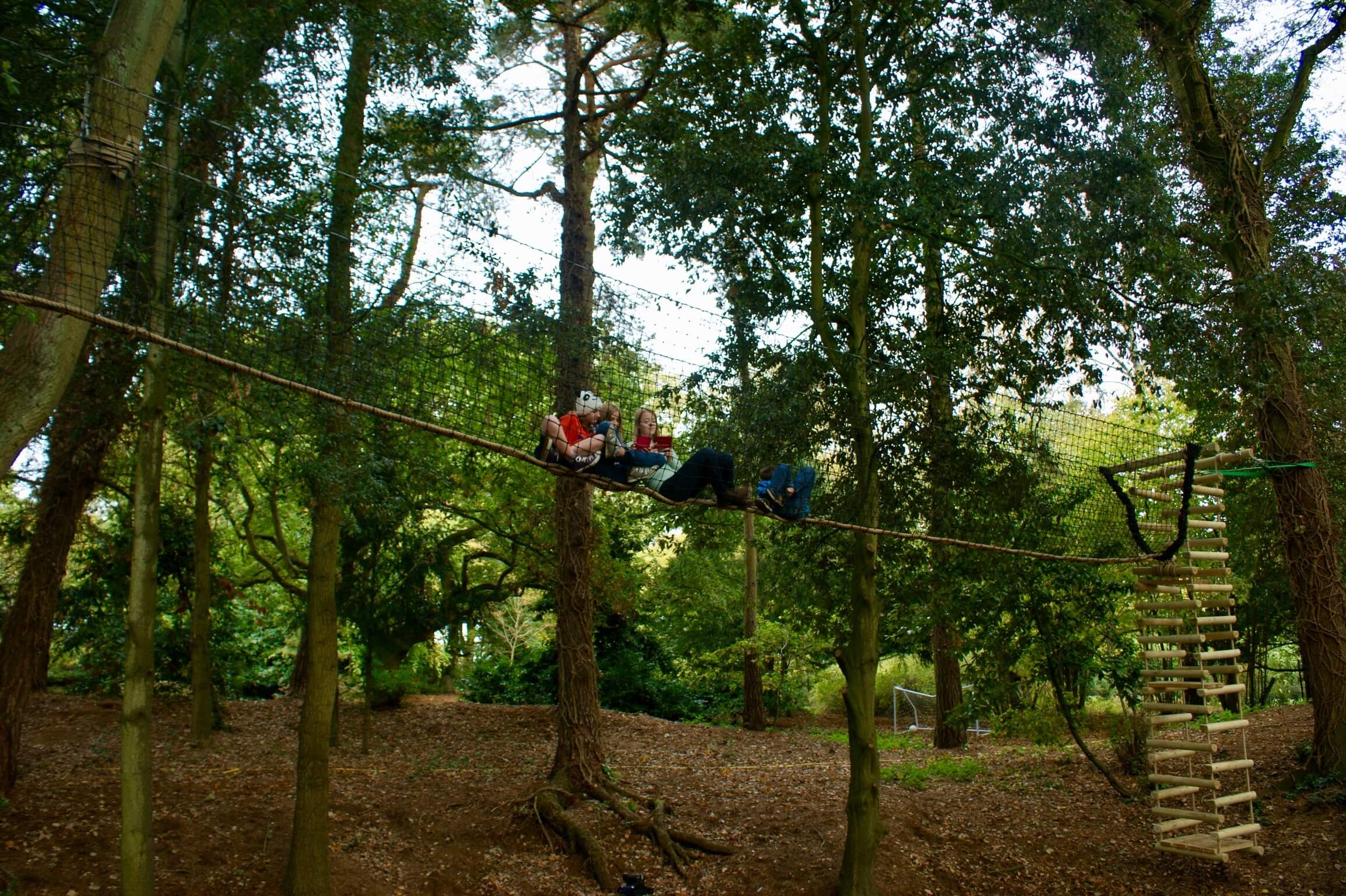
What makes this safe rather than reckless is careful design, and Cameron is precise about the difference between introducing risk and building in danger. The treehouse is never engineered to be actually dangerous; instead it introduces all the things a child needs to think about as they navigate a challenge. He gives a beautifully concrete example. On a zip wire, the child holds a knotted rope, which keeps them upright; if they let go at any point, they simply come down onto their feet. It is never set at a height that would cause real harm, and the landing is a soft grass lawn. The risk is felt and real to the child, but the consequences are gentle by design. This is the practical heart of positive risk: the experience of risk is genuine, while the danger is carefully managed. For any parent, this is the model worth holding - challenge that feels meaningful to the child, contained within conditions that keep them safe.
The reason this matters so much, in Cameron's view, is that children today encounter far less of the productive failure and fear that earlier generations grew up with - and the cost is real. Where a child once learned to dust themselves off and try again, that adrenaline and recovery is now sometimes labelled as anxiety, leaving children too frightened to attempt things and reluctant to fail, especially under the gaze of social media. The lesson a child draws from positive risk is profoundly practical: if I hurt my foot dropping from the knot, I won't do that again; I'll climb back up, hold on properly, and ride it the whole way. And if I'm frightened but my friends or siblings are jumping, I'll make myself do it. Crucially, the child doesn't realise they are doing this. They are simply playing - and in doing so, they are quietly establishing resilience and a can-do attitude that will serve them for life.
Cameron is honest that this involves a genuine parental fine line, and that there is no fixed answer to it. We instinctively want our children not to get hurt, yet they need to encounter some hurt, in some form, in order to develop. He is candid that he is not claiming to be a perfect parent, and that every parent knows the scenarios of trying to control and manage risk. What he offers instead is thoughtful design that tilts the odds. Treehouses are built as safe spaces - with balustrades, with conscious awareness of where accidents happen. One especially valuable insight concerns crowding: with a group of, say, eight children, accidents often arise from bunching and crowding behaviour. So the journey is deliberately designed with multiple routes, so two children can head one way and two another, dispersing the crush. The space is shaped to discourage the behaviours that cause accidents, without removing the risk that builds the child. That is a genuinely instructive principle for anyone creating play environments: design out the hazards while preserving the challenge.
There is a vital role for the adult in all this, and it is not the role most parents assume. Cameron is heartfelt that parental guidance should not mean standing back, merely watching, or preventing children from doing things. It means getting on the zip wire yourself, showing them how, playing with them, making them laugh at how silly a grown-up looks coming down a zip wire. There is something powerful, he suggests, in a child seeing their dad play. He shares his own experience of Go Ape with his sons - terrified, awkward, saying all those adult words like "what happens if I fall?" while the boys laughed at him. We overthink risk as adults, he reflects, and modelling the willingness to try anyway, fear and all, is one of the most valuable things a parent can do.
Perhaps the most beautiful dimension of positive risk is what it gives back, and it ties to a deeper principle Cameron returns to: the treehouse belongs, in the child's mind, to the child. Though the parents paid for it, it is the children who own that world - and it is the children who invite the grown-ups in. This is a profound role reversal. So much of the time, children are guests in our grown-up world; here, for once, the adult is the guest in theirs. He likens it to the way, at a Disney park, it is the children who guide the grown-ups through an imaginative space. When a child invites a parent onto the zip wire or into the treehouse, the child experiences feelings of achievement, success, strength and bravery - words too grown-up for them to voice, but feelings they unmistakably hold. And the parent experiences glee, joy and childlike energy in return. It may happen only once or twice a year, on a sunny half-term or a Saturday afternoon, but those moments are remembered forever.
Cameron knows this because he remembers it himself - the ramshackle, knocked-together treehouse his grandfather built him, far rougher than anything he builds now, yet unforgettable. He cannot recall how often he invited his mum and dad into that space with his brother and sister. It may have been only once or twice. But he remembers the feeling. That is the lasting gift of positive risk: not the absence of fear, but the memory of having met it, together, and come through braver. For any parent, the takeaway is gentle and clear - embrace risk rather than fear it, design for safety without erasing challenge, model courage by joining in, and trust that the child meeting risk in play is becoming, quietly, more resilient than any rulebook could make them.