Being Niche, embracing Scarcity and always World-Class
How treehouses become a whole family space
Subject:
Family
A treehouse is bought, in theory, for the children - yet the families who live with one quickly discover it becomes something far broader: a shared space the whole household drifts toward. It turns out to be where a parent reads or does yoga on a Saturday morning, where children sit quietly high among the branches, and where a family steps away from the pull of screens to talk, slowly, surrounded by nature.
Understanding how a treehouse genuinely functions as a family space - not merely a children's play structure - reveals why so many parents have it quietly in mind as a place for the whole family from the very start, and why it draws everyone together in a way the family home rarely manages.
If you are wondering whether a treehouse really serves the whole family or just the children, the honest answer from decades of building them is that it becomes, almost always, a shared family space. It is rarely a solo experience. It is somewhere children share activity together, but equally somewhere grown-ups go to sit, read, and listen to music - a place for yoga, for wellness, for health. This dual purpose is frequently at the back of the buying parent's mind from the outset: though the treehouse is nominally for the children, it is quietly intended as a space for the whole family. Understanding that from the start changes how you think about creating one.
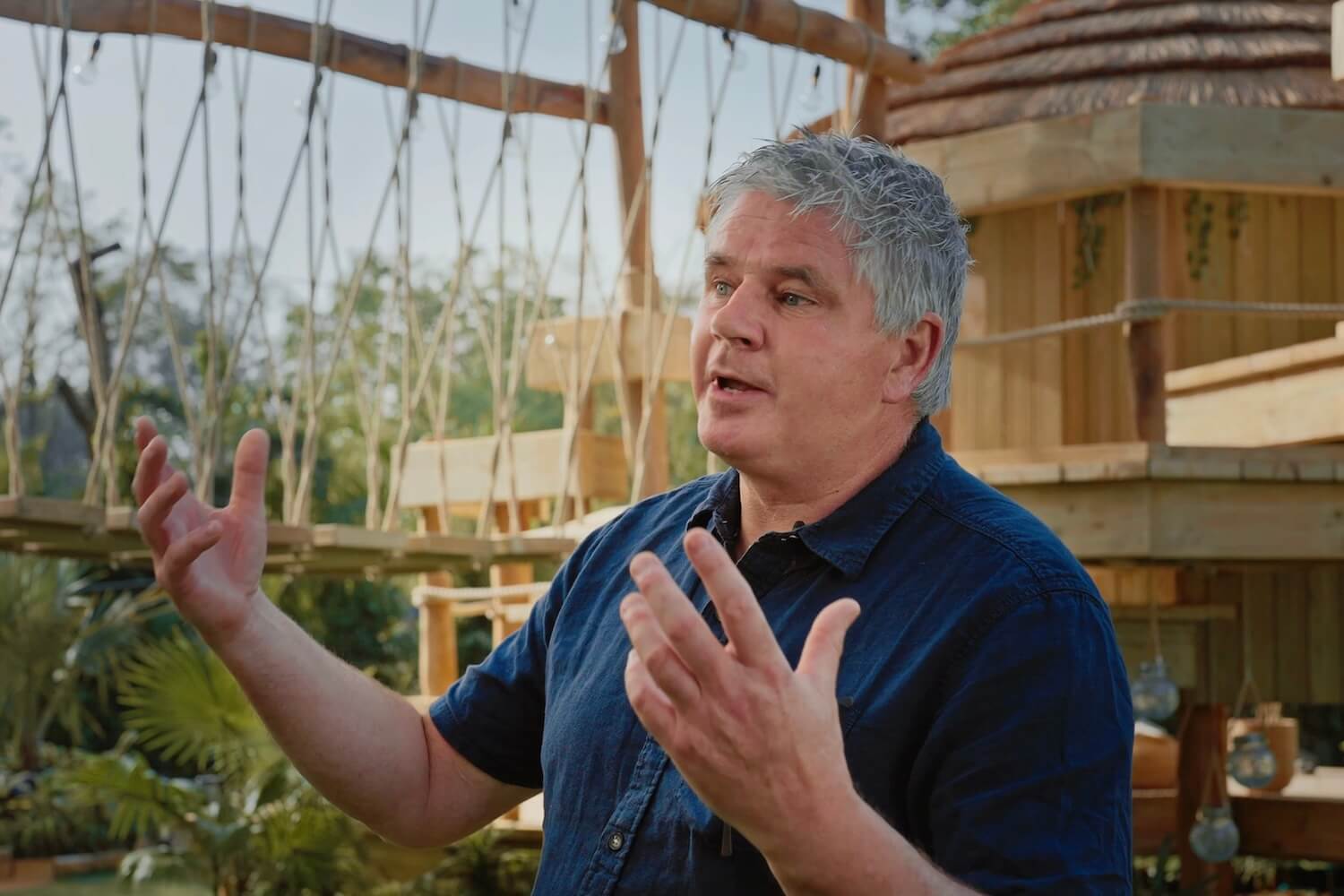
Paul Cameron of Treehouse Life designs deliberately for this shared use, and the practical detail is instructive for anyone imagining their own. Large decks are built to surround and wrap the treehouse at different heights, opening up genuine space for more than play. Soft furnishings, outdoor bean bags, and accessory kits can turn the structure into an outdoor lounge - an open-air room rather than a climbing frame. The point of this design is to make the treehouse somewhere the family actively wants to spend time together, not a place adults merely supervise from below. When a space is built to hold grown-ups comfortably as well as children, it naturally becomes the heart of family life in the garden.
The deeper purpose behind this, in Cameron's view, is escape - and it speaks to something many families feel acutely. He describes families coming away for a few hours on a Saturday morning, leaving behind the family house and everything within it that pulls us apart: the TV screen, the computer, the formality of indoor life. To step out into the garden and into a secret space within it is to step away from those distractions altogether. This is the crucial distinction between a treehouse and the home: the home is full of things competing for attention, while the treehouse offers a setting with, as he puts it, nothing else - just nature. For any family seeking to reclaim shared time, that quality of removal is the real value, and it is something a screen-filled living room simply cannot provide.
A common practical worry - that a family space like this requires a grand old tree - is one Cameron dispels directly, and the answer is genuinely reassuring. Treehouse Life describes itself, in many ways, as a treeless treehouse company. The structure does not rely on the tree for support; nothing is bolted or screwed into it. The tree is treated as an architectural space to work with rather than a structural necessity. Where a garden has no substantial tree, a treehouse can still be created among bushes and foliage, or built first and then planted around. Cameron describes a project in Windsor where the treehouse was built and a landscaper then planted large trees around and even through the decks, the foliage rising up through the structure to create a jungle adventure that looked stunning. The lesson for families is liberating: almost any garden can become the setting for a family space, tree or no tree.
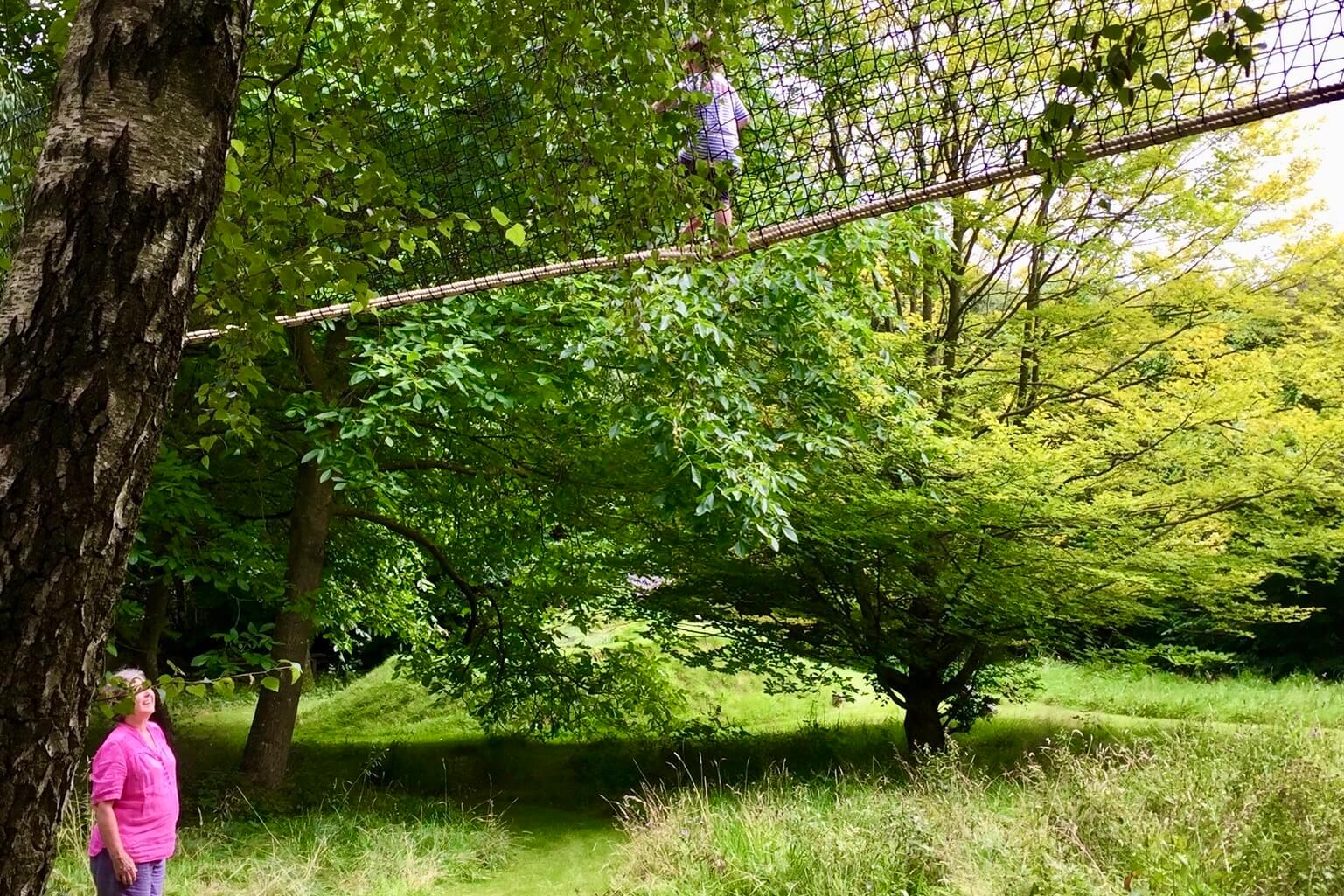
Perhaps the most quietly profound insight Cameron offers concerns what children actually do in these spaces - and it overturns a common assumption about childhood. He is a firm believer that children genuinely like to just sit. We almost forget this, he suggests, in our rush to fill their lives with action-packed activity. Returning to completed projects, he has seen children sitting in the scramble net or high up on a treetop walkway between the trees, simply sitting and laying and being. As a parent of two boys himself, he found this a real revelation - something he learned not from raising his own children but from observing how families use the spaces he builds. What families report back, again and again, is the chilled, quiet, slow time they spend together, having conversations fuelled by being immersed in nature. For parents anxious about whether children will truly use such a space, this is powerful reassurance: stillness, not just action, is something children seek.
This points to why a treehouse contributes so much more to family life than screens do, and the reasoning is rooted in the nature of nature itself. Slow, Cameron argues, is simply the best way to experience the natural world - if we really want to enjoy nature, we walk, and we walk slowly. That slow pace is our natural, instinctive space, and so much of modern life works against it, which is precisely why we end up tired and exhausted. The moment we slow down, we understand nature better, because nature works at a different speed: not fast, but slow. A tree might take a hundred years to grow; its timeframe is utterly unlike our hurried one. A treehouse, by drawing a family into that slower rhythm, brings them together in conversation in a way the rushing, screen-lit household rarely allows.
There is a poignant urgency beneath all this that gives the family-space idea its weight. Childhood, Cameron observes, moves even faster than modern life - and the window is narrower than we think. It is not eighteen years but really the span from age three or four or five, perhaps ten short years, before it is gone. Creating a space that slows that time down, that holds a family together within it, is therefore not a small thing. And he is clear that slowness does not mean the absence of energy: every treehouse contains action elements - a climbing wall, a scramble net, a bridge. But these fast spaces, in his beautiful framing, are the access points to the slow space. Children race and climb their way in, and then settle, and the family settles with them.
For any family weighing up a treehouse, the takeaways are clear and encouraging. Expect it to become a space for everyone, not just the children, and plan for that with decks and comfort built in. Understand that its true gift is escape from the distractions of the home into the calm of nature. Know that you do not need a great tree, or even any tree, for it to work. And trust that children will use it not only to play but to sit, to slow, and to talk - drawing the whole family into the unhurried pace of the natural world, for the short and precious span of a childhood. A treehouse, in the end, is less a children's structure than a family's shared room among the trees.