Being Niche, embracing Scarcity and always World-Class
Why children need imaginative outdoor play spaces
Subject:
Imagination
The most valuable thing a treehouse gives a child is not a structure at all. It is a space to pretend. A platform among the branches becomes a café on Monday, a castle by Wednesday, a theatre or a school by the weekend - shaped entirely by a child's imagination rather than by the timber it is built from.
Yet imaginative outdoor play is exactly what modern childhood is quietly losing, as screens replace the unstructured hours where pretend once flourished.
Understanding why these spaces matter, and how to design them so children genuinely use them, reveals something that runs far deeper than carpentry: the difference between building a house in a tree and creating a place where childhood can unfold.
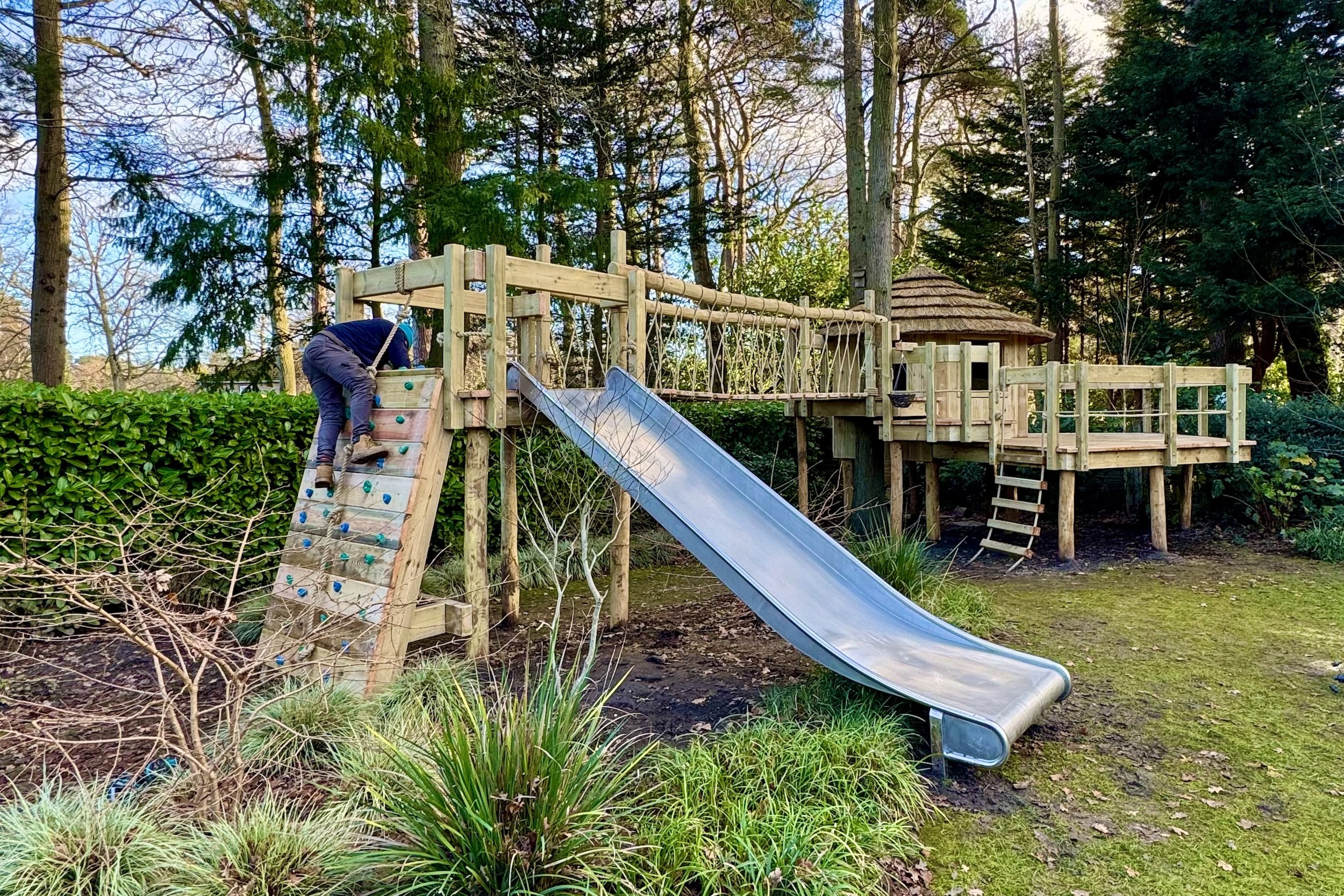
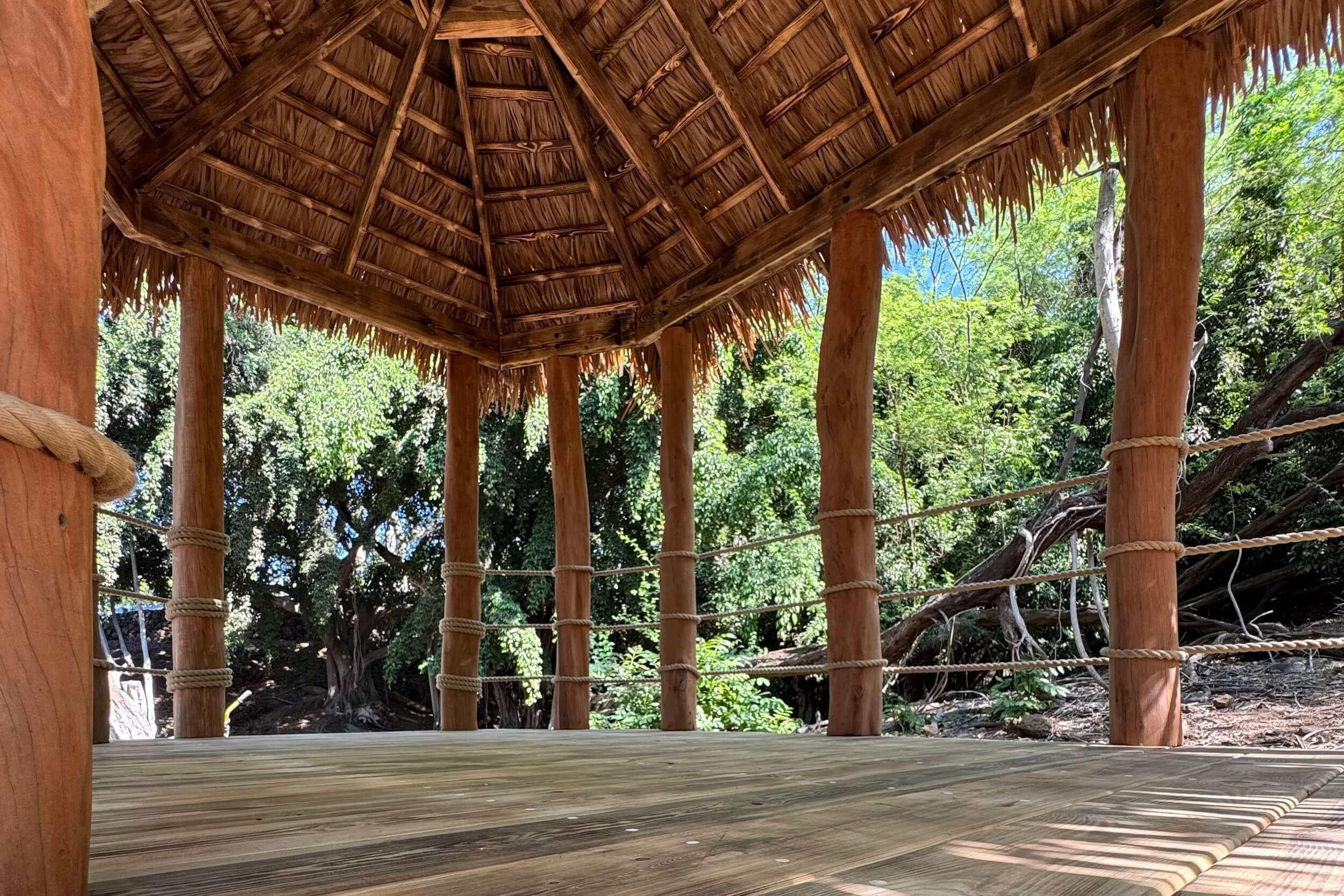
If you are trying to encourage more imaginative outdoor play, the single most useful shift is this: stop thinking about the object and start thinking about how a child will inhabit it. A play space succeeds when it invites pretend, not when it impresses adults. Paul Cameron, who founded the UK's longest-standing treehouse company and has spent twenty-five years designing these spaces for families around the world, frames the word "treehouse" not as a building but as a collective term for childhood itself - for the imagination, the play, and everything that small structure is allowed to become. A house is always part of the project, but it is one small part. The space matters more than the structure placed within it. This reframing has practical consequences for anyone designing a garden, a den, or an outdoor play area. Children do not arrive asking for something five metres wide or two metres high. They arrive with worlds. They want a café. They want a castle. They are already inside the world of imagination before a single measurement is taken, and the work of good design is to translate those emotional cues into something physical without flattening them into a generic box with a door and two windows. The mistake most people make is designing the house and forgetting the journey - the rope bridge, the scramble net, the walkway from one thing to another that gives play its narrative shape. Cameron's own route into this work explains why he sees it differently. He trained as a session drummer at the Royal College of Music before ever picking up a saw, and he describes treehouse-making as "the same muscle" - a creative instinct turned into something people feel and respond to. As a drummer, he learned to read the room from signals that were never written down: not the notation in front of him, but the groove the bass player was laying, the energy moving through the band. He listens the same way when families describe how they want to spend time together. Nobody asks for technical specifications. They give indications, signposts, emotional guidance about how they wish to use the space - and a designer's real job is to receive those signals and build for them. There is a useful framework hidden in how he runs the process: the move from "wish list to wow factor." Rather than presenting a catalogue, families are encouraged to dream openly, and those dreams are then translated - increasingly through 3D scanning and CAD modelling that places a precise design within its actual landscape - into something buildable. Yet the technical sophistication serves the imagination, never the reverse. The handcrafted, slightly imperfect look is held onto deliberately, even though a factory-built solution would scale more easily. That resistance to industrialising play is itself a design principle. A space that looks handmade tells a child it is theirs to remake.
For parents worried, rightly, about screen time, this work offers a quietly realistic answer. The goal is not to banish technology but to change the setting in which childhood happens. Cameron describes returning to old projects to find teenagers on their phones - but lying in the hammock or the scramble net of the treehouse rather than shut away in a bedroom. The structure does not defeat the iPad. It relocates it into nature, into fresh air, into a space that keeps pulling imagination back to the surface. Instead of losing a teenager to their room, a family loses them to the treetops. That is a more honest and more achievable aspiration than screen-free purity, and it is one of the clearest practical arguments for outdoor play spaces that grow with a child rather than expiring at a certain age.
What makes these spaces endure is ownership. One of the most telling details in his practice is the small handcrafted wooden sign, hung at handover, that lets children keep grown-ups out - adults must ask permission to enter. It sounds like a charming flourish, but it encodes something real about child development: a treehouse works because it becomes the child's own territory, an escape from the grown-ups' house in the way a childhood bedroom once was, only further out, closer to the trees, more genuinely theirs. That sense of a private imaginative kingdom is what keeps a three-year-old's treehouse meaningful to the same person at twenty-one, beer tins and university friends included. The emotional space outlasts the physical one.
There is a deeper reason this matters now. The capacity to pretend - to turn a cardboard box into a Grand Prix car or a castle - is something children are extraordinary at and adults steadily lose. When outdoor, unstructured play disappears, that imaginative muscle weakens before it has fully formed. A well-designed play space is, in this sense, less a luxury than a small act of preservation: it protects the conditions under which imagination develops. The same instinct that makes a parent want to "muck about" with their kids on a weekend, slipping briefly back into their own inner child, is the instinct these spaces are built to extend and protect.
The most resonant insight is the simplest. Cameron traces the entire enterprise back to his grandfather, a man who survived the Somme and built him a treehouse as a small boy, and forward to his own two sons, for whom he built three treehouses and who now work in the business. What looks like a company is really a chain of adults wanting to be a hero to a child - to give them the best childhood they can. Read that way, an imaginative outdoor play space is not a product dropped into a garden. It is the physical form of a wish that passes between generations, and designing one well means honouring the wish as much as building the structure.