Being Niche, embracing Scarcity and always World-Class
When a treehouse becomes a family's space
Subject:
Play
A treehouse is rarely just a structure in a tree. At its best, it becomes the place where a family spends some of its most precious time - where children imagine and pretend, and where parents quietly rediscover their own inner child. That distinction matters enormously when you are deciding whether to build one.
The real value lies not in the timber or the joinery, but in how a family will actually live around it: the weekend afternoons, the games invented and reinvented, the shared space where playing together becomes ordinary.
Understanding what turns an outdoor structure into a genuine family play space is the difference between buying an object and creating something a childhood is built around - and it begins long before any design is drawn.
If you are weighing up a treehouse for your family, the most useful question is not what it will look like, but how your family will use it. A treehouse is a significant, life-changing purchase, and unlike most things bought for a garden, it is there for the entire childhood of a family. That single reframing changes everything about how a good one is conceived. The starting point is never the structure. It is the family - the number of children, their ages, and, more importantly, how parents actually want to spend time with them.
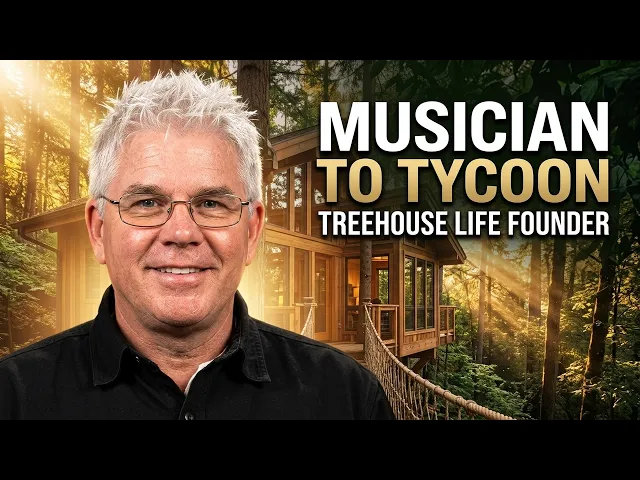
This is the principle Paul Cameron has built his work around. As the founder of Treehouse Life, an international designer and builder of treehouses, rope bridges, tree-top walkways and adventure parks, he describes the practice not as construction but as creating dreams. Every project begins with a wish list - an open conversation with a family about what they imagine - and the work is then to translate that wish list into what he calls a "wow factor." It is a deceptively simple framework, and it explains why so many treehouses fall flat. A structure assembled from a brochure can never carry the emotional weight of a space designed around how one particular family hopes to live. What makes a treehouse a true family space rather than a backyard ornament is that it holds two kinds of imagination at once. For children, it is somewhere to pretend - a place that becomes a castle one moment and a café the next. For parents, it is permission to delve back into their own inner child. Cameron is precise about why this matters. He points to the ordinary magic of a weekend afternoon spent "mucking about" with your kids, the moment a cardboard box becomes a Grand Prix car, a castle, a café. That is the precious, fleeting space where parents and children play together as equals, and a well-made treehouse is simply an extension of it - a permanent home for the pretend that usually evaporates by Monday.
Understanding this helps you avoid the most common misconception, which is that a treehouse is essentially a small house elevated into a tree. The house is only one element. The deeper purpose is to create a space the family is drawn into together, where time slows and attention shifts away from screens and schedules toward each other and the natural world around them. This is why the conversation at the outset matters so much. When a family is encouraged to describe not just what they want but how they want to feel in the space, the resulting design carries an intent that a catalogue product cannot replicate.
Cameron's own background sharpens this perspective in a way few in the field can match. Before treehouses, he spent a career as a session drummer, trained at the Royal College of Music, and worked across films, television, theatre, orchestras and rock and roll. He is candid that treehouse-making draws on the same creative muscle. The aim, in both, is to make people feel something - and when they feel it, they respond. With music, an audience stands, claps and dances. With a treehouse, that response is a family pulled outdoors together, a child disappearing into an invented world, a parent forgetting for an hour that they are a grown-up. Framing outdoor play as a kind of performance, something designed to move people rather than merely to be assembled, is what separates a memorable family space from a competent piece of carpentry. There are practical lessons here for anyone planning their own. Begin with purpose before form: decide what the space is for and who will use it, and let the structure follow. Design for the whole family, not only the children, so that the space invites parents in rather than leaving them watching from the lawn. Build for longevity, remembering that this is a space measured against an entire childhood, not a single birthday. And protect the imaginative openness of it - resist over-defining what the space "is," because its real value lies in becoming whatever a child's pretend play needs it to be that day.
That openness connects to something larger about how children thrive. Unstructured, imaginative play in a natural setting is increasingly understood as essential to childhood wellbeing, creativity and the simple capacity to be absorbed in something that isn't a screen. A treehouse, approached thoughtfully, becomes a quiet piece of infrastructure for exactly that - a fixed point in the garden that keeps drawing a family back into shared, outdoor, slow-living time. It is less an object and more an invitation, repeated daily, to play.
The most valuable thing to take from Cameron's approach is the order of priorities. The wish list comes before the wow factor. The family comes before the structure. The feeling comes before the form. Get that sequence right and a treehouse stops being a thing you buy and becomes a space your family grows around - the backdrop to years of afternoons you'll remember long after the children have stopped being children. The full conversation on the Treehouse Life Podcast explores how that wish-list-to-wow-factor journey actually unfolds, and why a drummer's instinct for making people feel something turns out to be the unlikely foundation of a great family space. It is well worth watching in full.