Treehouse Life News
Woodlands and the “Art of Slow-Play”
Subject:
Inspiration
Transform your woodland into a captivating destination with Treehouse Life's elevated play experiences. Discover how to engage visitors through immersive treetop adventures that celebrate nature while generating revenue for landowners. Embrace the art of slow-play and unlock the hidden potential of your space.
Unlocking the Hidden Potential of Your Woodland
Across the UK and beyond, many visitor attractions have a common challenge: areas of beautiful woodland or forest that are rarely visited. Guests might come for the stately home, the gardens, the café, or the maze, but woodland spaces often remain “redundant” - walked through briefly, picnicked in occasionally, yet offering little in the way of unique or revenue-generating experiences.
At Treehouse Life, we see these underused spaces as opportunities. Opportunities to create an adventurous, immersive, and educational experience that not only delights visitors but also delivers measurable return on investment for landowners. The key is to reimagine the woodland journey - not from the ground, where the view is familiar, but from the treetops, where the magic truly happens.
Elevated Play, Elevated Adventure and the Art of Slow-Play
Our concept of elevated play and adventure transforms an ordinary woodland walk into something extraordinary. We design experiences built around “slow-play” - an unhurried, tranquil and deeply immersive journey that invites guests to pause, look, listen and truly connect with nature.
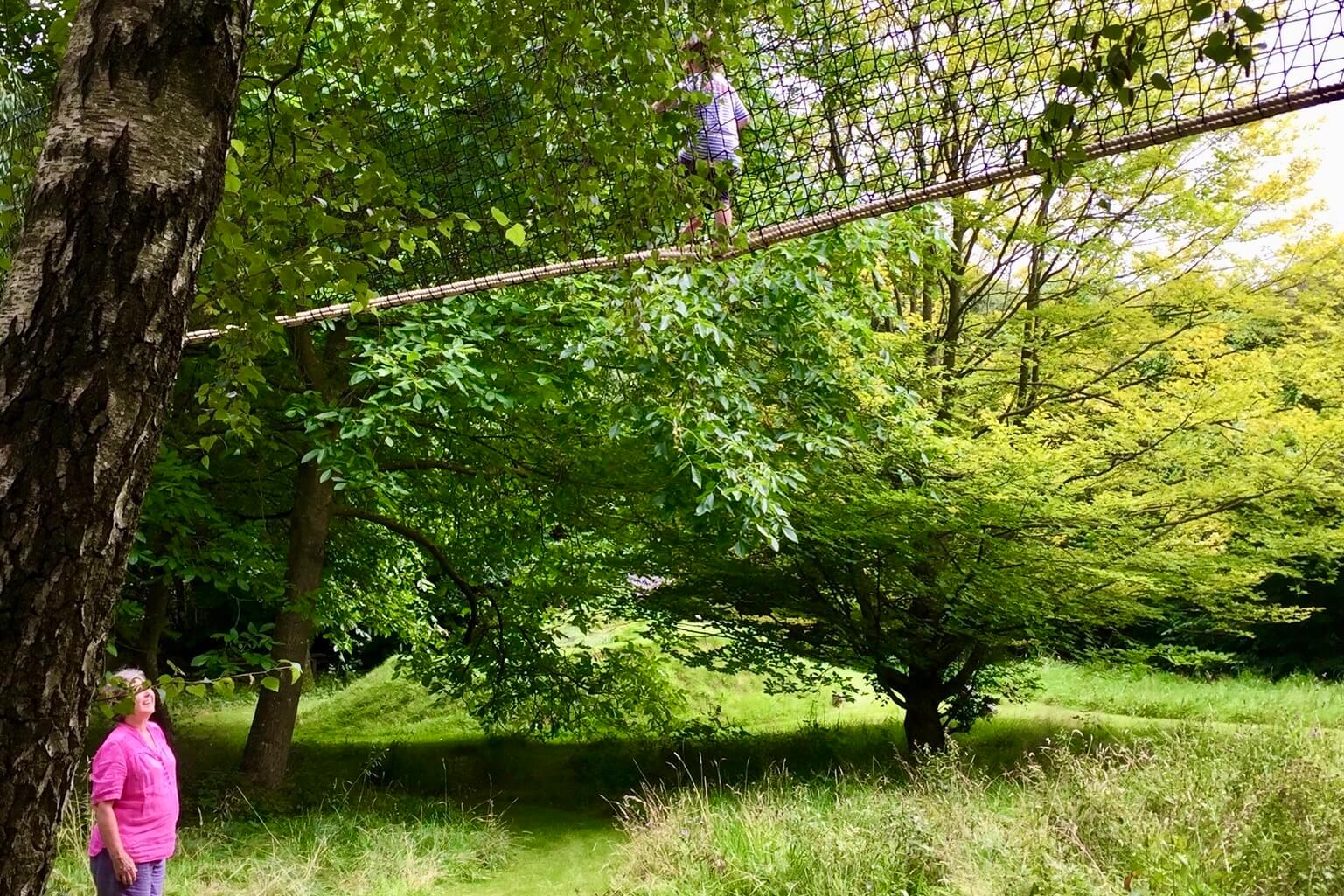
Imagine taking visitors five, ten, even fifteen metres above ground into the canopy itself - the realm of birds, squirrels, and the intricate architecture of the branches and leaves. Here, guests see and feel the woodland from a perspective few ever experience.
The journey takes place along treetop walkways and rope bridges designed with safety, accessibility, and sustainability in mind. It’s not a high-adrenaline activity - there are no harnesses or fear-inducing elements. Instead, families wander at their own pace, exploring a safe, netted environment that celebrates the beauty of the natural world while encouraging reflection and play.
A Visitor Journey Like No Other
An elevated woodland route can be designed as a loop or a journey with a destination. Along the way, guests encounter stop-off decks and treehouses where they can rest, play, and observe the forest at their own pace. These spaces can host educational encounters, storytelling sessions, or school workshops that bring the natural world to life.
Imagine woodland theatres where small performances unfold under the canopy or forest schools where children learn while immersed in nature. At the journey’s end, there might be a woodland café or log cabin serving fresh coffee and croissants deep among the trees, or an adventure play zone that extends the family day out. Each stop enriches the experience, extends dwell time, and creates multiple opportunities for revenue generation.
Return on Investment for Landowners
By transforming underused woodland into a destination in its own right, landowners can add a paid-for attraction that complements existing offers like gardens, events, or heritage tours. Elevated woodland experiences encourage longer visits, higher visitor satisfaction, and increased secondary spend - while celebrating and preserving the natural character of the site.
Our walkways are designed with sensitivity to the environment, minimising impact on the woodland floor and enhancing the ecology rather than disturbing it. The result is an attraction that blends adventure, education, sustainability, and slow-play calmness, appealing to families, schools, and eco-conscious visitors alike.
Bringing the Vision to Life
Treehouse Life has years of experience creating safe, certified, and truly memorable treetop environments. Every design is tailored to the unique character of the woodland, ensuring an authentic and distinctive visitor journey.
For landowners and visitor attractions seeking to unlock the full potential of their redundant spaces, the treetops offer more than just an alternative route - they offer an entirely new perspective.