Being Niche, embracing Scarcity and always World-Class
The practice of rare mastery
Subject:
Engineering, Structural Analysis
A field note from Treehouse Life International, on the engineering of consequential structures and what it takes to deliver them.

Some projects come round two or three times in a specialist's whole working life. Not the routine commission, however carefully it gets prepared. Not the prestige private engagement either, legendary client and all. We mean the project where the structure has to be beautiful and survive every test a flagship public asset will ever face. Geotechnical first. Then dynamic, then the regulatory grind, then the political weather around it.
And at the very end, if it ever comes to that, judicial.
Every line of the engineering holds, then holds again, under scrutiny nobody briefed you to expect.
We took one of those on earlier this year. A rope bridge, inside a Vision 2030 giga-project in Saudi Arabia, for a commission that sat at the flagship end of things. Two materially different design solutions, the brief said. Evaluate them against each other, under code, on a locked site basis, and make every decision traceable to the moment someone made it. The senior structural engineer running the project had real regional weight behind her, years of it, and she brought us in as specialist consultant. Rope design authoring, our end. The Engineer-of-Record interface stayed hers. On its own, neither side gets this built.
This isn't a case study. The project's still live, the client stays unnamed, and the findings belong to the commission rather than to this page. What follows is the other thing - how work at this level actually gets approached. What we bring to it. How we think through it. Where the line runs between specialist consultancy and engineering authorship, and what holding our own standard costs us when the pressure's on.
Why this work needs the kind of consultancy we are.
Most structural engineering lives inside large firms, and that's exactly where it should live. They've got the breadth, the headcount, the institutional machinery to take a project the whole distance from concept to commissioning. Most of the built environment around you got made that way and it works. It works because the ordinary structure sits well inside the codes. An office block. A span. A residential tower fifteen storeys up. Eurocode 2 was written with that building in mind, and Eurocode 3 right alongside it. The in-house tools the global firms keep were calibrated against the same population of structures. So the graduate engineer running her deflection check has half a century of precedent under her, and the numbers come home clean.
A rope bridge doesn't behave.
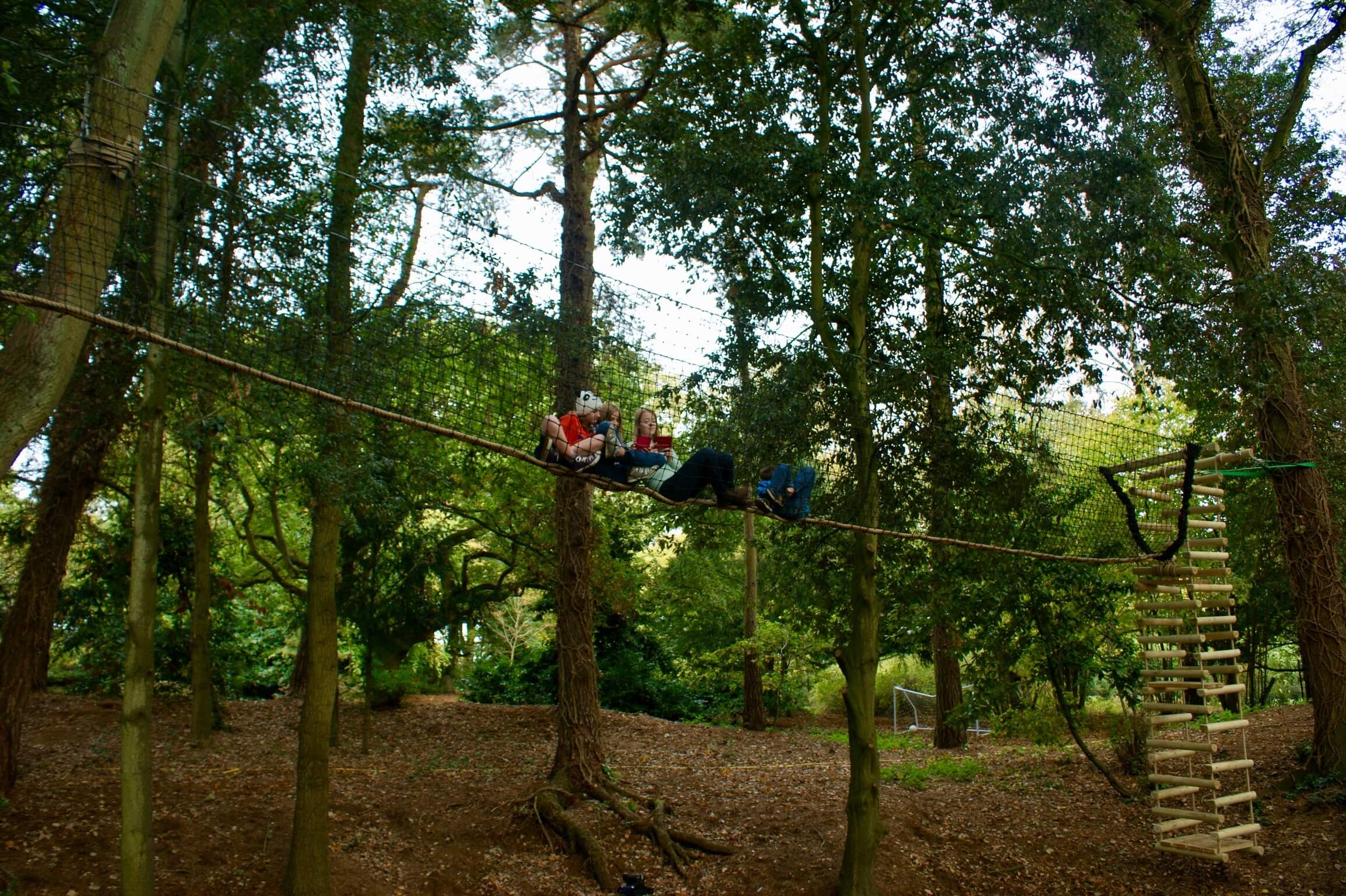
Neither does a treetop walkway, or an elevated traverse, or the rest of what we specialise in. They live at the edge of the codes and sometimes past the edge, because the codes got written for buildings that work in compression and bridges that work in bending - not for the thing we deal in, which carries its load in tension, deflects enormously, and goes geometrically non-linear the moment you look at it. The stiffness depends on the pretension in the cables. Read that again, because it's the whole problem: the structure's resistance to deforming is a function of how hard you've already pulled it tight. Load one and it sags by an order of magnitude more than a steel bridge of the same reach. Its natural frequencies won't sit still - they shift with self-weight and pretension and refuse to simplify. Take a single cable out and the question isn't whether load finds a path through the members beside it. It's whether the cables still standing can swallow what's been dumped on them before the whole thing unzips, one fitting after the next, down the length of the span.
To those of us inside this typology, none of that raises an eyebrow. To everyone else, all of it does.
So the consequential rope bridge work clusters in a handful of specialist practices worldwide, and we're one of them. Twenty-five years on this single typology - treehouses, treetop walkways, adventure parks, premium hotel installations, National Trust properties, the odd commission whose client we'll never name in print - is what built the tools, the precedent library, the analytical conventions, the judgement none of this runs without. We're not a substitute for an Engineer of Record on a major civil job. We'd never pretend otherwise. The role's narrower and sharper than that. We're who the Engineer of Record reaches for when the bridge waiting on her signature is a structure her own tooling can't really analyse and her precedent library has never met. Second consultant, then, not first. The Engineer of Record's name goes on the construction package; ours sits in the appendix as the specialist underwriting the rope engineering. Liability and competence, split on purpose. For these structures it's the honest division.
How we approach a comparative analysis - The engagement behind this note had a shape to it. Two solutions to weigh, and a client brief that wanted the comparison transparent, defensible, and ready to go straight up in front of senior architectural and regulatory review. So we built a six-stage framework. The detail moves around from project to project. The framework itself has hardened into settled practice.
It opens on the primary analysis. Every rope bridge job we take starts inside our own Rope Bridge Structural Analysis tool - third major revision by now - which holds twenty-five years of judgement on cable mechanics, fitting capacities, deck loadings, foundation forces. Both solutions go through it identically. Parameters locked, revision-controlled, and every PASS/FAIL gate computed on its own for each design under the code framework we'd agreed. That's the baseline. Everything afterward gets measured against it.
Then come the supplementary analyses, one per solution, picking up the engineering the spreadsheet doesn't natively reach. On a typical pedestrian rope bridge that's the suspender behaviour, the robustness under accidental load and cable loss, the parapet and balustrade provision under whatever pedestrian load code governs, the dynamic response against EN 1990 frequency exclusion zones and the published guidance on synchronous lateral excitation, the wind action with its porosity effects, the mast or anchor check. Each one handled on its own, for each solution, with the wall kept up between them the whole way. No cross-contamination - that's our phrase for it internally. The logic's not complicated. Compare two solutions, and the comparison only means something if both were judged on identical assumptions, with nothing leaking across from one into the other.
Stage four nobody enjoys. The code reconciliation memorandum. On a project with regional weight the governing codes almost never sit in one jurisdiction. A footbridge delivered in the Kingdom under EN 1991-2 §5 has to reconcile against the Saudi Building Code load combinations, and those rest in turn on ASCE 7 underneath. You have to show the Eurocode-native analysis envelopes the SBC requirements before anyone can ask a construction company to build to it and mean it. Dull work. Also the work you cannot skip. This memorandum is what lets the Engineer of Record put her signature under a Eurocode position on a project tendered to regional regulation.
Stage five is where it converges. The consolidated comparative review pulls the primary and the supplementary work into one picture you can actually read, gate by gate, both solutions' utilisation ratios and verdicts and relative standing laid out in a single table. Things show up here that the standalone analyses kept buried. A solution that read stronger across the primary gates turns out compromised on a supplementary one. Or a design that threw a fistful of capacity failures early reveals itself, on a wholly separate ground, as conceptually inadmissible - something only the supplementary work could surface. This is the engineering heart of what we deliver.
And then the monograph. We pick the word deliberately. What goes out at the close isn't a report in the usual consulting sense. It's a structured engineering document made to be read end to end by senior architectural and regulatory review - the judgement, the caveats register, the parameters workbook, the remediation menus, bound into one navigable thing. Reportage at this calibre looks like this.
The integrity convention - A working principle has settled into the practice over the years, and we take it more seriously now than we did at the start, not less. The integrity convention, we call it. In one sense it's obvious - it's only what good engineering always asked for — but saying it out loud, and then locking it into the procedural fabric of every single job, is part of what separates consequential work from work that's merely competent.
Here's the whole of it. The data leads. The conclusion follows after. Never the reverse.
You run the analysis on the assumption you don't yet know how it ends, because if you knew you wouldn't need to run it. Inputs locked at the start. Every assumption written into the caveats register at the revision where it got made. Every PASS, every FAIL, the output of a computation under those locked inputs - not a verdict you reached early and then dressed for company. Inconvenient findings go in faithfully. The marginal ones get flagged at a utilisation ratio of 0.90 even when instinct swears they'll come good. Every failure mode arrives with a quantified remediation menu attached, so the way back to compliance is something you can see and cost, not a hand-wave. And the audit trail stays complete and revision-controlled, built to outlast any challenge that turns up later.
Which means, in practice, that we sometimes sit across from a client who'd much rather hear a different number. Most uncomfortable part of the work. Also the part that matters most. A solution comes back with three or four FAIL gates in the primary, and there's always a tug - from the client some days, from your own urge to be useful on others - toward reframing the analysis until the failures read as passes. Reclassify the use class downward, let a lighter live load do the work. Quietly revise an input assumption in hindsight so the failing design slips through. Soften the verdict on the page until a decisive position turns into an ambiguous one.
We don't.
Not out of pedantry - though on the engineering itself, freely, we are pedants - but because everything we sell rests on one proposition. What we hand over can be relied on, absolutely. By the Engineer of Record who brought us in. By her successor, if the structure has a long life ahead of it. By the reviewer who, thirty years from now, might be sitting over the wreckage of something and tracing back the basis it was built on. Let the conclusion lead the data once, even a little, even the once, and that proposition's gone and won't come back. We'd sooner lose the engagement than the engineering. The position has cost us less than you'd guess, as it happens, because clients who want rare mastery and a legacy over sheer scale tend to want the integrity for the same reasons.
One moment from the recent job makes it real. Midway through, a hypothesis surfaced: maybe one of the two solutions could be saved by reclassifying the structure under a different use class. Move it out of the civil pedestrian footbridge category and its heavier live loads, into a lighter recreational class that eased the demand and pulled the failing capacity gates back into PASS. The thought wasn't stupid. It was a parkland installation, after all, and parkland installations have gone in under recreational codes before now. We turned it down. The use class had been locked at the very start, everyone agreeing, on the basis of how the bridge would actually be used — by people, on foot. Reclassifying it mid-analysis to rescue a failing design would have been letting the conclusion lead the data, plainly. So we held. The failing solution stayed failed. The other came through as the stronger design on its own engineering merits, ground that held independent of the use-class question and, by the end, firmer than it. The convention survived. The comparison stayed clean. The recommendation sits on ground no later challenge is going to shift.
On the calculation tool - Our Rope Bridge Structural Analysis tool - third major revision now - is the calculation engine sitting behind every rope bridge engagement we take. Twenty-five years on one typology, more or less, distilled into a structured workbook: cable tension under parabolic and per-rope conventions, fitting capacity across our standard library of rigging components, deck-level live load resolved into pedestrian and concentrated and parapet line loads, foundation forces worked through bearing and sliding and overturning and uplift, the mast or anchor checked under the combined axial-and-bending case.
It isn't public. It won't be. Intellectual property of real commercial value, and it underwrites a serious share of the engineering authority we walk in with. What we publish, on jobs that lean on it, isn't the tool. It's the output - every input parameter, every computed demand and capacity, every utilisation ratio, every gate, and the method that produced them, all of it referenced back to the operative code clauses. There's the right division between the specialist's IP and the Engineer of Record's need to verify. She gets everything she needs to check the engineering by working the cited clauses against the published inputs. We keep the tool that produced them.
When an Engineer of Record wants a closer look at the tool itself, we'll talk, under the right confidentiality arrangements. Case by case, that conversation. Depends on the engagement, the client, what the inspection's for, the framework agreement the whole thing sits under. What we won't do is treat the tool as a routine deliverable and hand it over, because it isn't one and never was. The specialists in tension structures, in wind, in geotechnics, in dynamic verification — not one of them passes their proprietary tooling to the Engineer of Record as standard. The tool is the very thing that marks them off from a generalist. The deliverable is the verified result.
What the monograph contains - The closing artefact of one of our comparative engagements is the monograph: a single navigable document, made to be read end to end by senior architectural and regulatory review. The finding stated decisively up front, in the executive summary. The engagement basis and the locked caveats register beside it. The parameters workbook, with every common parameter and every solution-specific variable on record. Primary and supplementary analyses, each solution. The code reconciliation memorandum. The consolidated comparative review. The quantified remediation menus. The engineering judgement. And a closing appendix that gathers the methodology, the recommended further work, the full code reference set.
We build it on a plain belief: engineering this serious deserves presentation to match. These documents get read and passed around at the level of the project where how a thing reads carries nearly as much as what it says.
Every monograph closes on the same plate. The engineering judgement, one decisive paragraph of it. Then the supporting discriminators, reported straight - what the recommended solution costs, what the rejected one genuinely had in its favour, what the construction reality on the ground actually is - because the convention wants the whole picture and not the flattering slice of it. The recommended adoption, said plainly. And then the line it always ends on.
The data led. The conclusion follows.
It's the only way we know how to do this.
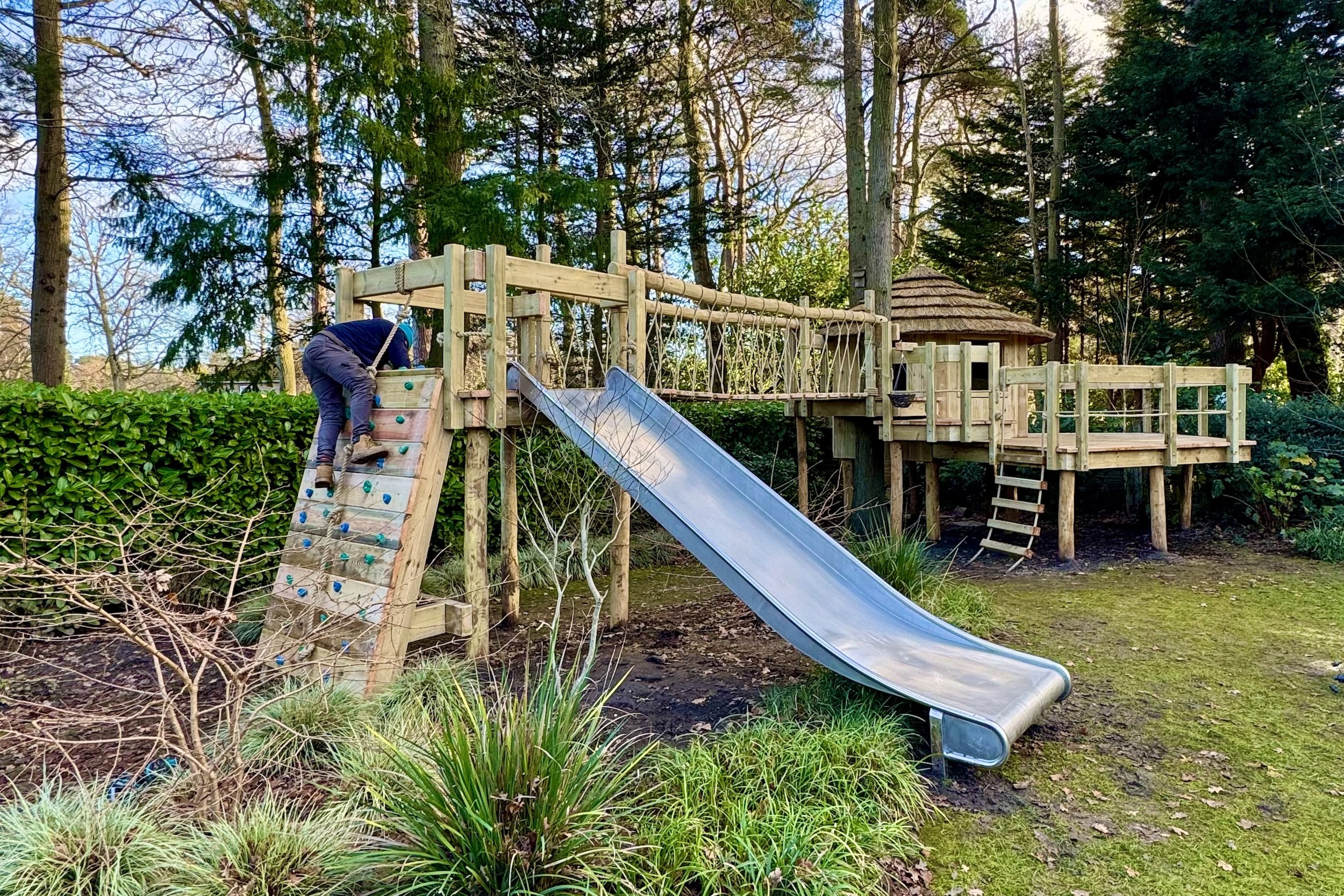
The clients this work serves - We're a small practice by choice. No chasing volume. No advertising. The engagements we take are the ones where the structure means something, the client cares about rarity and mastery ahead of scale, and the work earns the depth we'll give it. The client list, over the years, has come to hold names you'd know without our ever printing them. A-list private clients out of music and entertainment. International footballers at the top of the game. The National Trust. Premium hotel resorts and visitor attractions. Architects whose own work carries real weight. And every so often a regional flagship of the kind that set this note going. A private family treehouse in an English garden at one end, a giga-project installation in Saudi Arabia at the other, and the standard we bring doesn't drop in between. That's what rare mastery actually means. Not exclusivity for the sake of it - accumulated specialist competence, brought to a structure at the depth that structure deserves, whatever its size.
If you've read this far and you're weighing whether what we do is what your project needs, write to us. Paul Cameron, founder and principal specialist, reads every enquiry that comes in himself. Discreet conversation. The scope gets drawn to the specifics of your project. And we'll tell you straight, right at the outset, whether we're the right specialist for it. If we aren't, you'll hear that too - sometimes the right specialist is someone else, and usually we know who. That recommendation is part of what we offer.