Being Niche, embracing Scarcity and always World-Class
How a treehouse design goes from idea to build
Subject:
Design
A treehouse design begins long before anyone draws a line. It starts with a way of standing in a garden, looking at a tree or a cluster of trees, and seeing what is not yet there. Turning that vision into something a family can climb into is the real work - and it rarely follows the path most people imagine.
There are no clients handing over measurements or asking for something five metres wide. Instead there is conversation, listening, and a careful translation of feeling into structure. Understanding how a bespoke treehouse moves from a first idea to a finished build reveals why the best outdoor structures feel less like products and more like places that were always meant to exist.
If you want to understand how a custom treehouse is actually designed, the most important thing to grasp is that the process runs in the opposite direction to most building projects. It does not begin with dimensions and drawings. It begins with how a family wants to feel in a space - and the technical specification is reverse-engineered from there. This is the method Paul Cameron has refined across twenty-five years at Treehouse Life, and it is what separates a thoughtful, site-specific design from a structure ordered out of a catalogue.
The starting point is what he calls the wish list, gathered during a site consultation with the family. What is striking is what the family does not provide. Nobody asks for something two metres high. Nobody specifies a footprint. They talk instead about how they intend to use the space - whether the children imagine a café, a castle, somewhere to hide, somewhere to gather. Those are emotional signposts, not technical instructions, and the designer's task is to receive them and quietly begin translating. Cameron describes knowing, by the end of a consultation, almost exactly what will be created, even though not a single measurement has been discussed. The design is already forming in the gap between what a family says and what they actually mean.
He draws a precise analogy from his earlier life as a session drummer. On stage, the most useful information rarely came from the notation in front of him - the crotchets and quavers - but from the grooves around him: what the bassist was playing, where the guitarist was leading. A musician learns to read signals that were never written down. A treehouse consultation works the same way. The family is communicating in feeling and intention, and a designer attuned to that can translate emotion into timber far more faithfully than one who simply takes an order. This is why listening, rather than drafting, is the first real design skill.
Once those emotional cues are understood, the formal constraints enter the process: budget, scope, and the landscape itself - the trees, the ground, the river, the particular character of the space being worked in. None of these are obstacles to the vision; they are the conditions that shape it into something buildable. Good treehouse design lives in the honest negotiation between imagination and site. A vision that ignores the land it sits in is just a daydream. A design that respects the trees, the levels and the available budget becomes something that can genuinely be made.
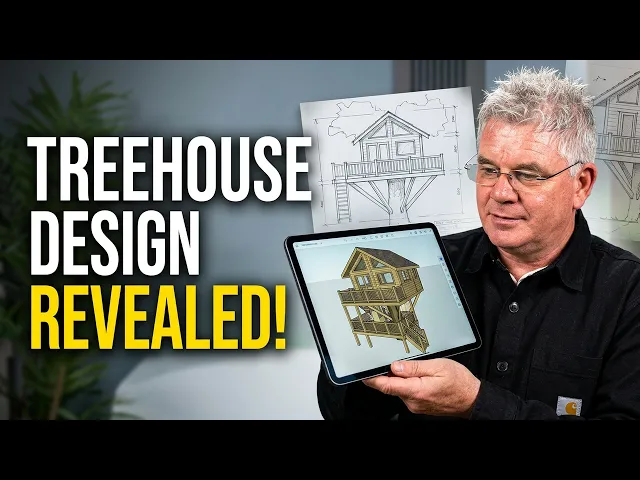
From there, the modern process becomes considerably more sophisticated than its hand-built origins might suggest. Ideas are translated into a 3D CAD model so the client can see what the finished structure might look like. Treehouse Life also uses 3D scanning to capture a specific tree or location with precision, then combines that scan with the design drawing. The result is a genuinely accurate representation of how the structure will sit within its actual landscape - not a generic render, but this design, in this garden, around these trees. For anyone commissioning bespoke outdoor work, this is the detail worth looking for: the difference between a supplier showing you a product and a designer showing you your own space, transformed.
The final stage is where craft and efficiency meet. Every element of the approved design is translated into a process in the workshop, where the components are made before being brought to site and assembled. This off-site fabrication is what allows a complex, handcrafted structure to be delivered cleanly and efficiently, with far less disruption to the garden and the family than building everything in place would involve. It also makes possible one of the most charming applications of the method: the surprise build. Because so much can be prepared in advance and assembled quickly, a treehouse can be installed as a Christmas or birthday gift, hidden under tarpaulins during short winter days, with the children occupied indoors until the moment it is revealed - sometimes finished with a large red bow for Christmas morning. The discretion is only possible because the design process is so thoroughly worked out before anyone arrives on site.
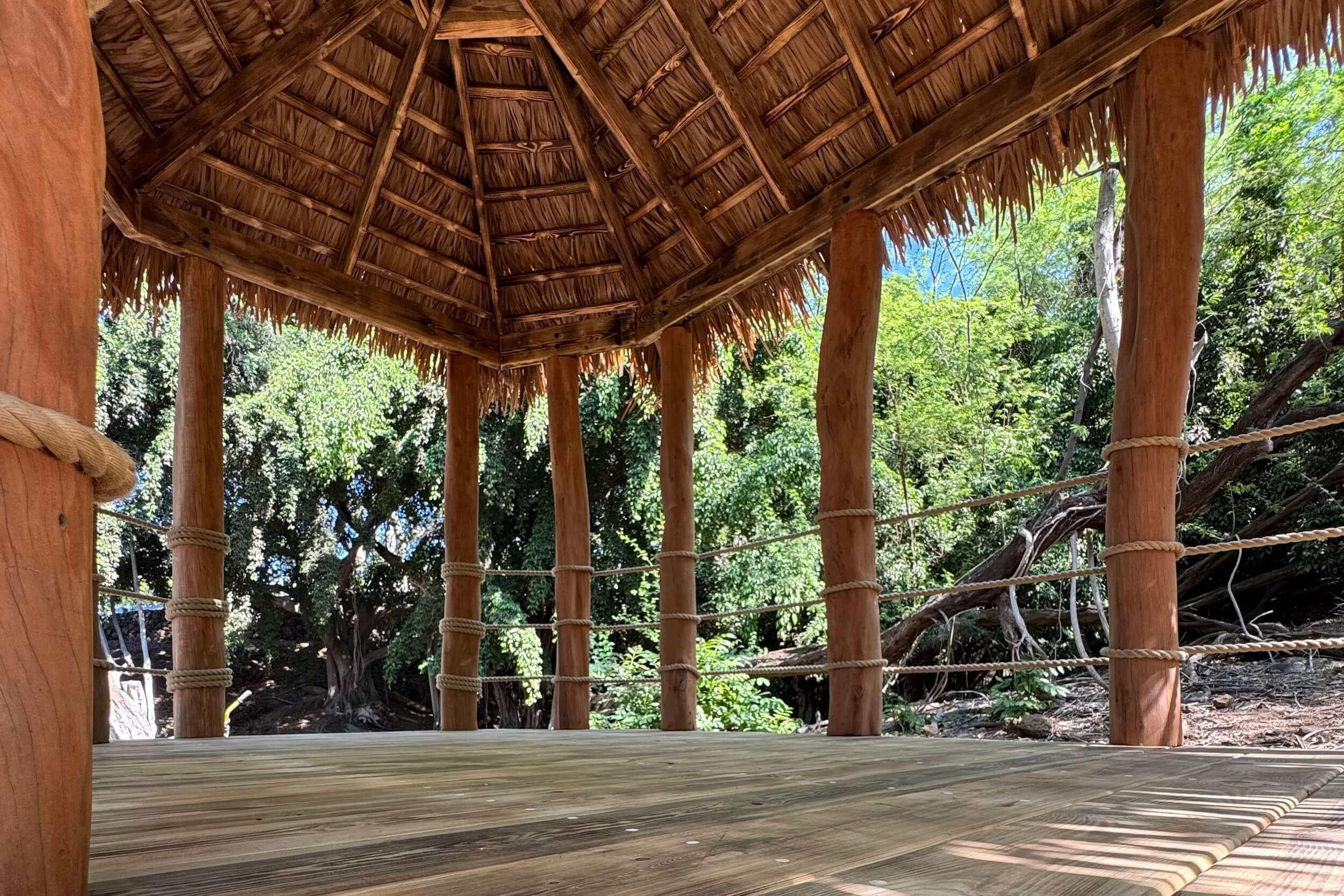
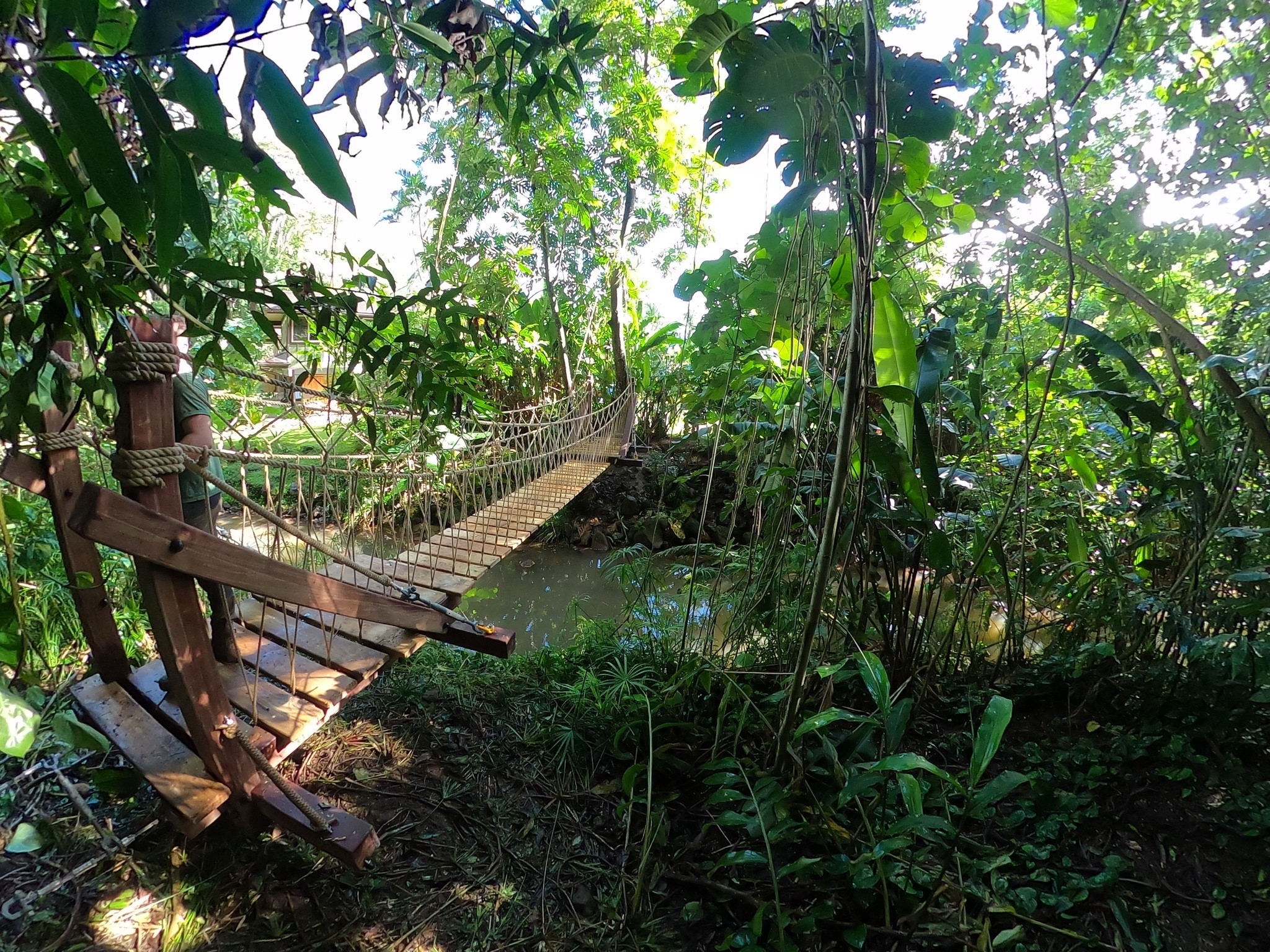
There is a deeper principle running through all of this, and it is the most useful thing to take away. A treehouse is never just about the house. It is about how people will move through and use the space - the journey from one part to another, the rope bridges and walkways that turn a single structure into an unfolding experience. Designing for that journey, rather than for the object, is what makes a finished build feel alive rather than static. The family asked for a treehouse; what they are actually given is an experience, a piece of wonder shaped around the way they hoped to spend time together. They rarely realise, during those early conversations, how much of what they said was being read, interpreted and turned into form.
For anyone considering a bespoke outdoor structure, this reframes what to expect from a good design process entirely. The questions that matter most are not about size or materials but about use, feeling and the life a family imagines living in the space. A designer who leads with listening, respects the landscape, models the result honestly, and engineers the build for a clean delivery is offering something far more durable than a product. They are offering a place that fits - emotionally and physically - into a particular family's world.