Being Niche, embracing Scarcity and always World-Class
Build real client relationships in business
Subject:
Relationships
For any business selling something personal and high-value, the relationship with a client is not a preliminary to the sale - it is the sale. How that relationship begins shapes everything that follows, from trust and expectations to whether the final result lands as a quiet disappointment or a genuine wow.
Yet most companies start in the wrong place: a showroom, a brochure, a polished pitch. The more durable approach turns out to be far warmer and more human, closer to a conversation at a kitchen table than a transaction across a desk.
Understanding how to build that kind of client relationship, and why it consistently outperforms the slick alternative, reveals something useful for anyone whose work depends on trust rather than volume.
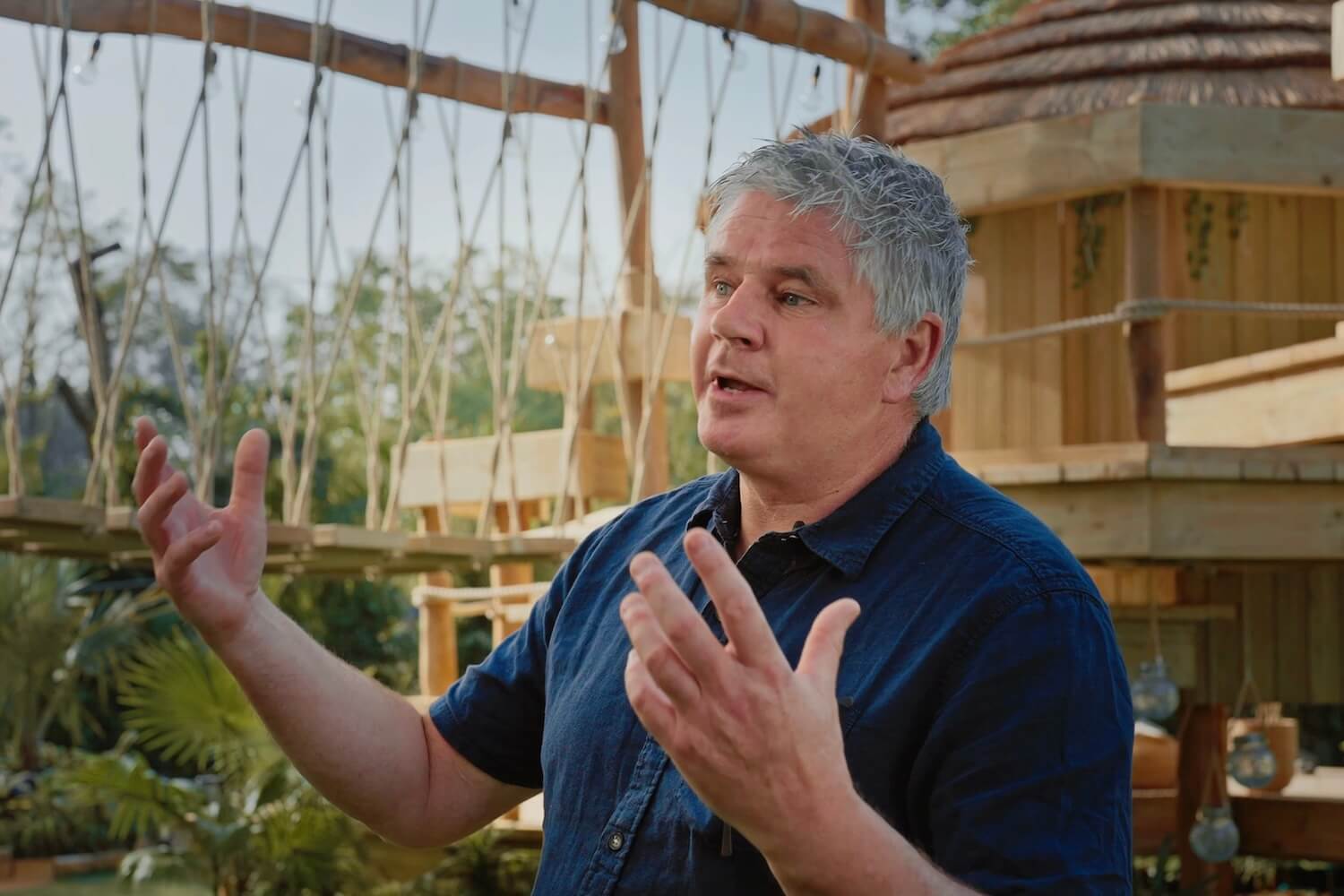
If you sell something personal, bespoke or expensive, the most important decision you make is where and how the relationship with a client begins - and the answer is almost never a showroom. The principle that should guide it is an old one that business schools and salespeople repeat for good reason: people buy from people. For Paul Cameron, who has spent twenty-five years building treehouses for families around the world, that truth is not a slogan but the foundation of how every client relationship is formed. The first meeting sets the tone for everything that follows, and getting it right matters more than any brochure or pitch deck ever could.
Cameron calls his approach the "breakfast table relationship," and the name captures the whole philosophy. He deliberately begins in a relaxed, informal space - the kind of setting where the kids are running around, there's a cup of coffee going, and the table is comfortably messy. It is not always literally over breakfast, but it is always that style of encounter: human, unguarded, domestic. Crucially, it is not in a showroom, not behind a brochure, and not conducted online. Most clients first find the business through its website, so the digital experience matters, but Cameron is clear that the online impression must then be personalised into something real. The relationship cannot live on a screen. It has to move into a shared, human space before any meaningful trust can form.
This is a genuinely instructive reversal of how most premium businesses operate. The instinct, when selling something valuable, is to impress - to stage the encounter in a polished environment that signals professionalism and control. Cameron's experience suggests the opposite works better. By starting in a setting that feels like family life rather than a sales meeting, he removes the transactional barrier that puts clients on guard. The informality is not a lack of seriousness; it is what allows the seriousness to be heard. A parent will tell you what they actually hope for their children across a kitchen table in a way they never would across a showroom counter. For any business where understanding a client's real, often unspoken wishes is essential to delivering well, that shift in setting is a practical lever worth pulling.
What this opening relationship is really designed to do is establish trust honestly, and that honesty extends to limitations. Cameron is emphatic that at no point are clients being fooled or flattered. From the outset, he explains clearly what can and cannot be achieved - and with treehouses, constrained by trees, sites, budgets and physics, there are always limitations. This candour is not a weakness in the relationship; it is the source of its strength. By managing expectations precisely at the start, he makes it possible to deliver genuine excellence against those expectations later. The "wow factor" he aims to deliver at the end is only possible because the beginning was truthful. A relationship built on overpromising collapses at handover; one built on honest framing allows the final result to exceed what was realistically agreed. For anyone in a service or craft business, this is the quiet mechanism behind delighted clients: under no illusions, then over-delivered to. Cameron draws this discipline directly from his earlier career as a professional drummer, and the parallel sharpens the lesson. A musician cannot exist, he points out, if they fail to perform as expected and as written when the conductor's beat comes down or the green light goes on in the studio - no matter how they feel that day. Excellence, in that world, is not an aspiration but a baseline delivered on demand, every time. He carries that standard into business through what he calls "moments of excellence," driven into every part of the work rather than reserved for the finished product. The site consultation itself is meant to be a world-class experience, not merely the build. This matters for client relationships because trust is not earned only at delivery; it accumulates across every touchpoint, beginning with that very first conversation. If the first meeting is excellent, the relationship is already on solid ground before a single piece of timber is cut.
There is a further insight in how Cameron frames excellence, and it dismantles a common excuse. He is careful to say it is not elitist, flippant or unachievable - it simply means doing things in the best way you can make them. Excellence, in his telling, is available to any business willing to commit to it consistently, from the first website impression to the first brochure to the first client meeting and onward. The reason it builds such strong relationships is that clients feel the difference between a company performing a transaction and one genuinely committed to the quality of their experience. When excellence is laid out as a clear expectation and then delivered exactly as promised, the client experiences something rare: a business that does precisely what it said it would, to the standard it described. That reliability is the bedrock of trust.
The practical lessons here translate well beyond treehouses to any business built on bespoke, personal or high-trust work. Begin the relationship in a human, relaxed setting rather than a formal one, so clients feel able to share what they truly want. Personalise the encounter quickly, especially if it started online. Be honest about limitations from the very first conversation, because managed expectations are what make later excellence possible. And treat every stage - not just delivery - as an opportunity for a moment of excellence, since trust is assembled across the whole journey. Done together, these turn a one-off sale into a relationship clients return to and recommend, which is precisely what has sustained Cameron's business across a quarter of a century.